


Actuators are essential components in industrial process control systems, providing the mechanical force required to position valves in response to control signals. Whether used in power generation, refining, chemical processing, or pipeline operations, actuators form the critical link between instrumentation and physical process control.
By Gobind Khiani – Valve Engineering Consultant – GAPV Inc.

Actuator Construction and Functional Components
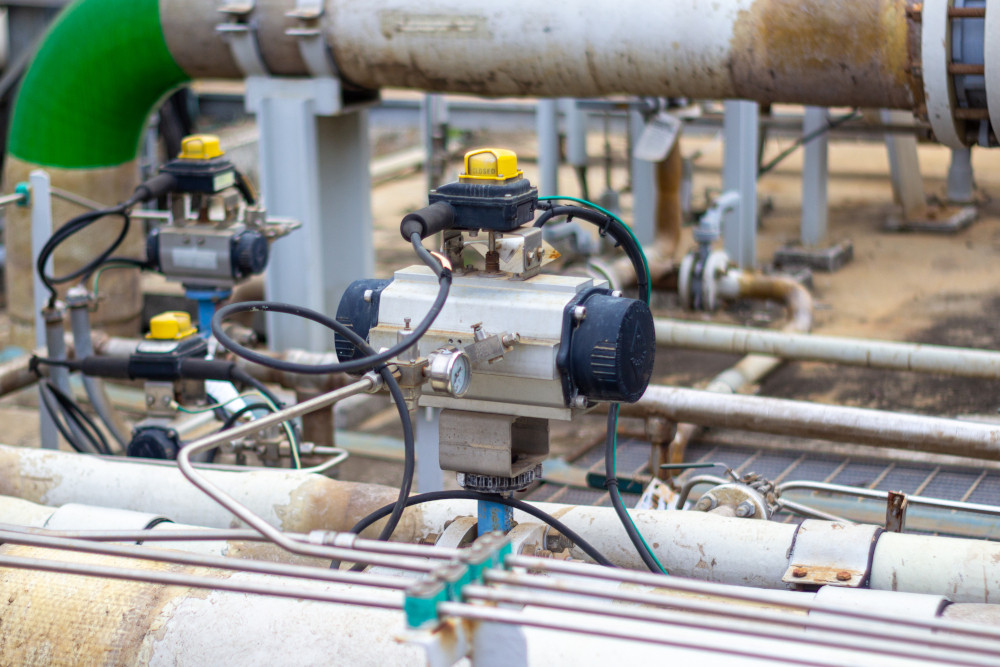
A typical pneumatic diaphragm actuator consists of several primary components that function together as a single mechanical system. The diaphragm converts pneumatic pressure into a linear force, while the spring provides opposing force and establishes the actuator’s fail-safe position. The stem transmits motion from the actuator to the valve plug, and the yoke or frame maintains alignment and structural integrity under load. The actuator casing encloses pressure and protects internal components from the environment.
Each component plays a critical role in its performance. Improper diaphragm seating, incorrect spring installation, or misaligned stems can significantly reduce effective thrust and stroke. These issues may not be apparent during initial installation but can lead to erratic behavior, air leakage, or premature failure under operating conditions. Actuators must therefore be assembled, maintained, and evaluated as integrated systems rather than isolated parts. This article discusses the overview of the most pressing supply chain challenges facing industries today.
System-Level Review and Worst- Case Operating Conditions
Actuator sizing must be based on worst case operating conditions rather than nominal process values. The objective of sizing calculations is to ensure that the actuator can reliably move and seat the valve under the most demanding conditions expected during service. These conditions typically occur during startup, shutdown, process upsets, or emergency scenarios.
Key parameters include upstream and downstream pressures, maximum differential pressure, fluid properties, operating temperature, and flow direction. For example, a valve operating with 1250 psi upstream pressure and 950 psi downstream pressure experiences a differential pressure of 300 psi, which can impose substantial forces on the valve plug. In flow-toclose configurations, the actuator must overcome both the differential pressure force and the seating force to achieve tight shutoff.
Undersized actuators may stall or fail to close when differential pressure increases, while oversized actuators may apply excessive force, accelerating wear or damaging valve internals. Proper sizing balances reliability, safety, and mechanical integrity.
Component-Level Force Analysis and Bench Set Considerations
Beyond system-level analysis, actuator sizing must be validated through component-level force balance calculations. The available actuator thrust is determined by the product of applied air pressure and the effective diaphragm area, minus the opposing spring force.
This net thrust must exceed the total force required to move and seat the valve, including fluid forces, packing friction, and seating load.Spring selection and adjustment are critical factors in this balance. The bench set defines the pressure range over which the actuator begins and completes its stroke.
An incorrectly selected or adjusted spring can prevent full valve closure at low pressure or restrict valve opening at high pressure.Accurate bench set configurationensures predictable valve motion and stable control performance across the operating range.
Codes, Standards and Regulatory Compliance
Actuator and valve assemblies are governed by industry codes and standards that define minimum requirements for design, materials, pressure containment, structural integrity, and testing. Standards such as ASME, API, and IEC are developed from extensive operational experience and documented failures. Compliance with these standards is not optional; it is essential for safe and reliable operation.
Even minor deviations, such as the use of incorrect fasteners or materials, can invalidate certifications and require reanalysis or redesign. Regulatory inspections often focus on detailed compliance, and deficiencies can delay commissioning or expose facilities to unacceptable risk. Codes and standards must therefore be treated as fundamental design inputs rather than administrative obligations.
Vendor Documentation and Data Validation
Accurate actuator sizing depends on reliable vendor data, yet discrepancies between catalogs, specification sheets, and serial documentation are common. These differences may arise from varying assumptions, test conditions, or configuration changes. Engineers must take responsibility for reconciling these sources rather than relying on a single document.
Critical data to verify includes actuator thrust ratings, effective diaphragm area, spring range, bench set values, and leakage classification. Seat leakage performance is particularly important in critical services, where even minimal leakage can have safety or operational consequences. Engineering judgment and cross-checking are essential to ensure that vendor data accurately reflects the installed configuration.

Calculation Verification and Engineering Review
All actuator sizing calculations should be subject to independent verification. Common sources of error include incorrect temperature assumptions, misapplied fluid properties, over-looked frictional forces, or incorrect flow direction. These errors may not be immediately apparent but can compromise actuator performance under demanding conditions.
Verification is not redundant effort; it is a core quality control function. Independent review ensures that assumptions align with actual operating conditions and that safety margins are appropriate. This process is particularly important during plant outages, modifications, or retrofits, and where time pressure and fatigue increase the likelihood of mistakes.
Inspection, Documentation and Approval
Formal inspections and design reviews require comprehensive documentation of actuator sizing methodology, assumptions, calculations, and supporting data. Inspectors and reviewers evaluate not only numerical results but also the engineering rigor behind them.
A well-documented sizing program demonstrates that actuator selection is deliberate, defensible, and compliant with applicable standards. Successful approval reflects the cumulative effect of correct assumptions, accurate calculations, verified data, and adherence to codes. This process ensures long-term reliability and protects both personnel and assets.
Conclusion: Fundamental Principles of Actuator Sizing and Reliability
A thorough understanding of actuator components is essential for reliable valve operation. Springs, diaphragms, stems, yokes, and fasteners do not function independently; they operate as an integrated mechanical system. A deficiency or misalignment in any single component can compromise the actuator’s ability to transmit force accurately to the valve.
Engineers must understand how these components interact under pressure, temperature, and cyclic loading to ensure predictable motion and long-term durability. Maximum differential pressure, extreme temperatures, and unfavorable flow directions define the true design requirement.
Despite advances in automation, diagnostics, and control systems, actuator fundamentals remain unchanged. Its reliability depends on sound engineering judgment, conservative design philosophy, and disciplined execution. Small components often carry disproportionate responsibility, and failure at this level can compromise entire systems. Mastery of
actuator fundamentals is therefore essential to safe, efficient, and resilient industrial operations.
 Gobind (Gobind N Khiani MEng PEng) has served in engineering management roles for both operating and EPC companies and has received Fellowship in Engineering. He has a bachelor’s degree from the University of Pune in India and a Master of Engineering from the University of Calgary in Alberta, Canada. Currently he is Secretary of CPGCE, Vice Chairman of International Standards Organization, Volunteers at API, AMPP (formerly NACE), ASME, CSA, CPGCE, ISA, ISO, MSS-SP, and PRCI representing Canada.